
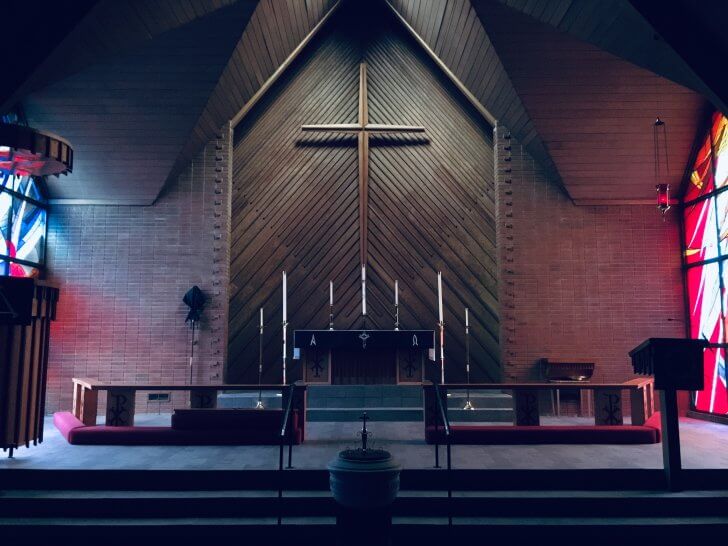
Different Traditions Within Christianity
After coming to China in 2007, I became much more conscious of Christian denominations. Without planning to, circumstances led me to attend a church from a different tradition. That experience allowed me to look at my own denomination objectively, from the outside.
The Christian church can broadly be divided into Catholic and Protestant traditions. Within Protestantism, many denominations—including Lutheran, Reformed, Baptist, Presbyterian, and Holiness churches—branch out like the roots of a great tree.
My home church belongs to a denomination that grew out of the Protestant Pentecostal movement. Its roots can be traced to the American Holiness tradition. It teaches that salvation is not merely a spiritual idea, but that a believer’s actual life on earth can also be sanctified. It also affirms the signs, miracles, wonders, speaking in tongues, and baptism in the Holy Spirit described in the Book of Acts.
I grew up in a church that had virtually no interaction with other denominations. Until I went to study in Beijing at the age of twenty-one, it was the only tradition I knew. In 2007, I began attending a Japanese church in Beijing. It was an evangelical church, and this became my first real encounter with another Christian tradition.
My Encounter With Evangelical Christians
What surprised me most at the time was how seriously the evangelical Christians studied the Bible. They had a strong intellectual curiosity and spiritual hunger for Scripture, and above all, they placed absolute trust in the words of the Bible.
At the same time, judging from my own immature and subjective impressions, church life there sometimes seemed to lack the sense of power I associated with Pentecostal churches. I must stress again that this was only my personal and emotional impression.
I am also fully aware that it is simplistic to divide Evangelicals and Pentecostals neatly into two opposing groups. Both labels describe human traditions; neither is perfect or absolute. I do not believe that one side is simply correct or that the other is necessarily inferior in its understanding of truth.
I received many good influences from evangelical Christians. There was a period when life in Beijing left me physically and emotionally exhausted. In that condition, I asked one of the church elders a question.

To be honest, part of me was hoping he would feel sorry for me and pray for me because I was suffering so much. His answer was not at all what I expected. Without a moment’s hesitation, he said:

“That is unbelief.”
I felt disappointed and disillusioned, and I thought he was cold and severe. Yet at the same time, I knew that what he said was reasonable.
Depending Too Heavily on Pentecostal Experiences
I am a second-generation Christian, but I began to believe in Christ in a genuine sense when I was seventeen. For the next four years, I resolved to follow Christ. Even then, however, I was beginning to sense that my faith depended too heavily on what Pentecostals might call spiritual experiences, and too much on my feelings. I thought, “If I cannot feel God, then God is not there,” or, “If I cannot sense something spiritual, then God is not with me.”
Looking back, I believe this was a very dangerous attitude toward faith. After that conversation, my attitude toward the Bible changed completely. If the elder had not spoken so plainly, my faith might still be unstable and dependent on feelings. I also reconsidered my belief that my own denomination alone was absolutely right and superior in its understanding of truth. My prejudice against Evangelicals gradually disappeared.
Pentecostals and Evangelicals
The Pentecostal movement is sometimes described in waves: the first wave from 1901 through the 1950s, the second wave or Charismatic Movement beginning around 1960, and a third wave beginning around 1980. Although some people now speak of a fourth wave—I am not even sure that such a movement clearly exists—one important development has been the narrowing of the distance between Evangelicals and Pentecostals.
At the risk of being criticized by fellow Pentecostals, I believe it is acceptable for a denomination to include speaking in tongues in its doctrine, but it should not force believers to speak in tongues. Likewise, it may teach the baptism in the Holy Spirit, but it should not force that experience upon believers. Scripture says:
There are various kinds of spiritual gifts, but the Spirit is the same. There are various kinds of service, but the Lord is the same. There are various kinds of workings, but it is the same God who works all things in everyone. The manifestation of the Spirit is given to each person for the benefit of all. To one person a word of wisdom is given through the Spirit; to another, a word of knowledge according to the same Spirit; to another, faith by the same Spirit; to another, gifts of healing by the one Spirit; to another, works of power; to another, prophecy; to another, the ability to discern spirits; to another, various kinds of tongues; and to another, the interpretation of tongues. All these are the work of one and the same Spirit, who distributes them to each person as the Spirit wills.
1 Corinthians 12:4–11 (translated from the Japanese Colloquial Version quoted in the original article)
The passage clearly says that people are given different spiritual gifts and different forms of service. From my own experience, salvation comes through believing in the heart and being justified, and confessing with the mouth and being saved. Except where illness or another circumstance makes it impossible, most churches also administer water baptism. I believe that the baptism in the Holy Spirit is necessary for living a sanctified life in practice. Some denominations may describe this as being filled with the Holy Spirit.
I am not qualified to settle the most controversial questions about speaking in tongues. I will end with what matters most:
“What I received I also passed on to you as of first importance: that Christ died for our sins according to the Scriptures, that he was buried, and that he was raised on the third day according to the Scriptures.”
The land of Canaan is shining again today.
Causes of Misunderstanding and Prejudice Against Pentecostals







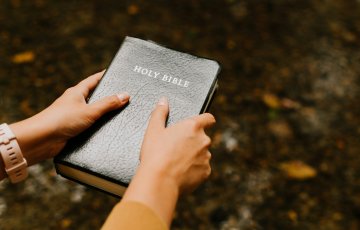


















“What should I do when I cannot believe the words of the Bible?”